
- Home
- Projects
Projects
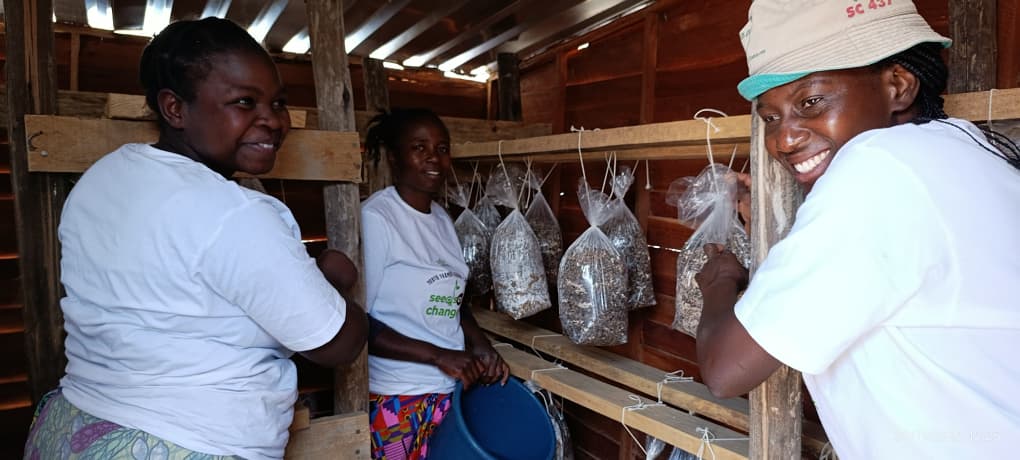

Seeds of Change: Youth Mobilizing for Agroecology Transition and Sustainable Food Systems
Supported by the Agroecology Fund, Seeds of Change: Youth Mobilizing for Agroecology Transition and Sustainable Food Systems is a multi-country initiative focused on advancing agroecology as a pathway to resilient, inclusive, and sustainable food systems. The project seeks to address systemic barriers that limit the meaningful participation of youth and women smallholders in food systems transformation, while strengthening food sovereignty, biodiversity, and climate justice.
Across Africa and much of the Global South, food systems are increasingly shaped by industrialized, capital-intensive, and vertically integrated models of production, processing, and distribution. These trends marginalize smallholder farmers, erode traditional knowledge, degrade ecosystems, and reinforce inequality. At the same time, youth and women – who are most affected by climate change, poverty, and social exclusion – continue to have the least access to land, finance, training, and decision-making spaces, despite global and regional commitments such as the 2030 Agenda for Sustainable Development and the African Union’s Agenda 2063.
Evidence from practice and research shows that smallholder farmers, particularly youth and women, play a critical role in sustaining local food systems and ecosystems. Yet their livelihoods are increasingly threatened by climate-induced shocks, rising input costs, and exclusionary policies. Without deliberate efforts to address these structural challenges, food systems will remain unjust, extractive, and vulnerable to climate and economic crises.
Seeds of Change responds to these realities by empowering youth and women smallholders as agents of transformation. Through hands-on agroecology training, inclusive policy engagement, and grassroots movement-building, the project aims to strengthen local capacity, reduce dependence on chemical inputs, and support community-led innovation. The initiative centers youth and women not only as implementers of solutions, but as co-creators of knowledge, policy, and practice needed to drive a just transition in food systems.
In the short term, the project focuses on enhancing skills and building collaboration among diverse actors through meaningful dialogue that highlights agroecology’s contribution to food sovereignty, biodiversity conservation, and climate justice. Over the long term, it seeks to strengthen a local and global movement of youth and women smallholders, promote the adoption of agroecology in policy and practice, and reshape narratives around climate and biodiversity crises to recognize smallholders as an integral part of the solution.
The multi-country project is currently implemented in Kenya, Zambia, Zimbabwe, and Kenya.
Project Objectives
The project is guided by the following objectives:
- Enhance Capacity and Skills
To strengthen the capacity of youth farmers, women smallholders, and local organizations through hands-on agroecology training, equipping them with the knowledge and skills to steward food sovereignty and environmental sustainability. - Demonstrate Agroecology in Practice
To showcase the viability and replicability of agroecology as a sustainable alternative to conventional food systems, while improving resilience and climate adaptation among smallholder farming communities. - Reduce Environmental and Economic Costs
To reduce chemical externalities and production costs in line with agroecology principles, particularly input reduction and ecological regeneration. - Create Green Livelihoods
To generate green jobs and contribute to an inclusive green economy for youth and women farmers. - Strengthen Policy Engagement
To provide inclusive consultation platforms that ensure farmers’ perspectives inform food systems decision-making and policy processes. - Foster Collaboration and Learning
To facilitate knowledge sharing, networking, and collaboration among African youth and food systems stakeholders. - Raise Awareness and Shift Narratives
To increase awareness of the critical role of youth and women farmers in achieving sustainable agriculture, food sovereignty, and the 2030 Sustainable Development Goals.
Through Seeds of Change, we aim to ensure that food systems transformation is driven from the ground up—rooted in community knowledge, youth leadership, and the lived experiences of women and smallholder farmers.
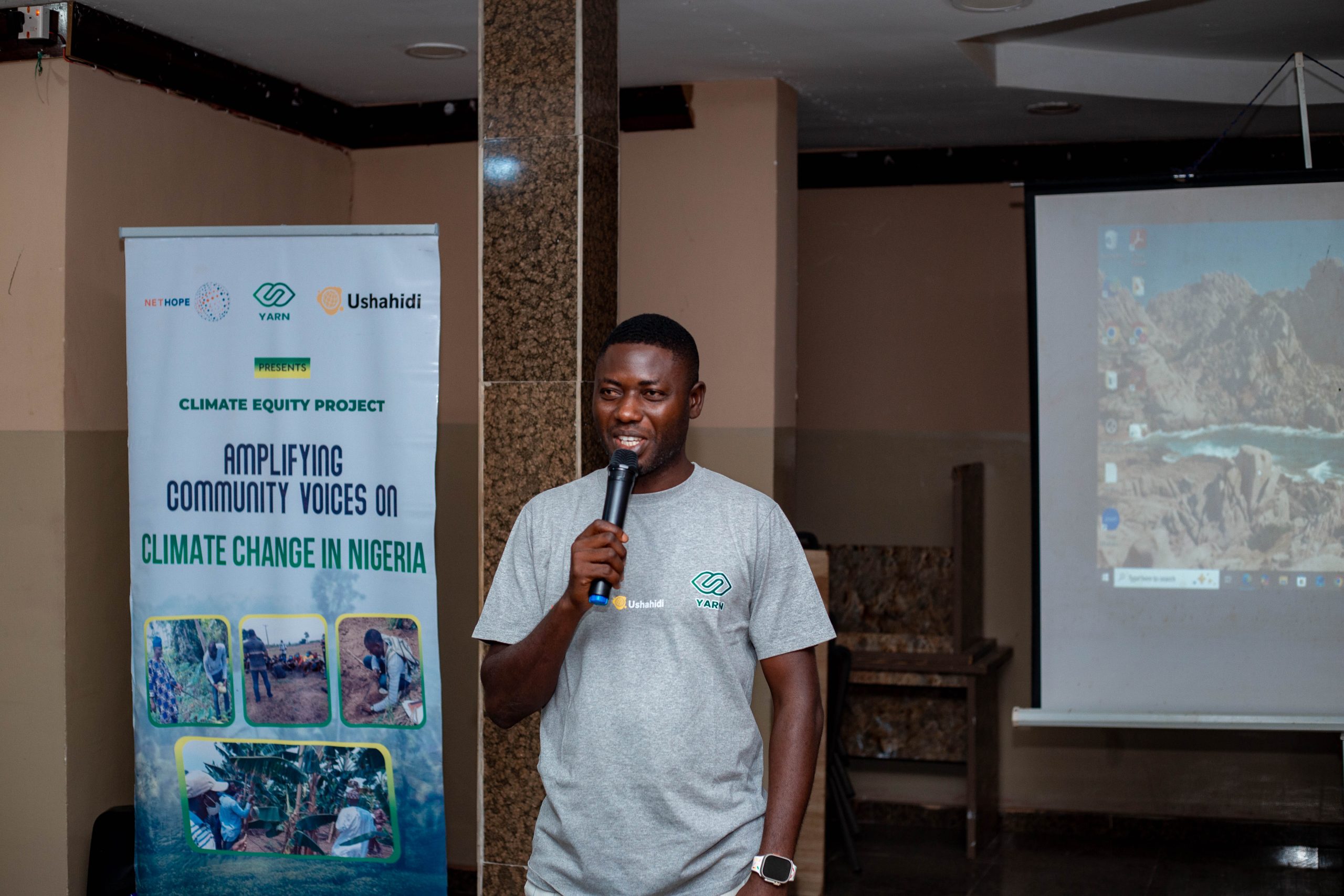

Amplifying Community Voices on Climate Change
YARN, in partnership with NetHope and Ushahidi, is implementing a pilot project titled “Amplifying Community Voices on Climate Change.” The project seeks to ensure that the lived experiences of frontline communities are centered in climate adaptation and resilience planning.
Across Nigeria, the cascading impacts of climate change are becoming increasingly evident. These impacts are further intensified by existing vulnerabilities, particularly among rural and marginalized communities who are already struggling to survive and have limited capacity to respond to and adapt to climate shocks. Despite this reality, these same communities are often excluded from decision-making processes when climate policies and interventions are designed.
Evidence from numerous studies shows that those most at risk from climate change are people whose livelihoods depend heavily on natural resources and rain-fed agriculture. This reflects the lived realities of many Nigerian communities. Smallholder farmers face declining incomes due to late onset and early cessation of rainfall; women and girls walk long distances to access increasingly scarce water; coastal communities experience loss of lives and livelihoods due to rising sea levels; persons living with disabilities and the elderly face heightened barriers to adaptation; and communities in Northern Nigeria are forcibly displaced due to drought and desertification. Without improved, inclusive, and needs-based policies, these challenges are likely to worsen.
This pilot project aligns with the Climate Equity pillar of the Climate Intersections Initiative. The pillar focuses on elevating community perspectives and lived experiences in climate adaptation and resilience planning at local, national, and global levels. Through this initiative, a comprehensive dataset will be developed that captures firsthand community experiences of climate change, including vulnerabilities, existing capacities, and adaptation strategies. The dataset will serve as an evidence base highlighting the impacts of climate change and the effectiveness of mitigation and adaptation policies implemented by governments, civil society organizations, and UN agencies.
In Nigeria, the project aims to gather insights into climate experiences and needs across one or two regions in Ogun State. The primary goal is to collect the lived experiences of over 3,000 individuals. These insights will be shared back with participating communities and their leaders, alongside capacity-building efforts to support the development of locally driven climate action plans.
Project Objectives
The project is guided by the following objectives:
- Amplify Community Voices:
To collect and elevate community members’ lived experiences of climate change, and support communities in using this data for local-level climate action and advocacy. - Build Local Capacity:
To engage communities and their leadership in understanding their climate vulnerabilities and strengths, and to co-create inclusive, participatory, community-based adaptation plans. - Enable Learning and Scale:
To leverage insights from the pilot phase to refine approaches and enable replication of the initiative in other geographic locations, supporting scalability and long-term impact.
Through this project, YARN and its partners aim to ensure that climate solutions are informed by those most affected – placing community voices at the center of climate action.
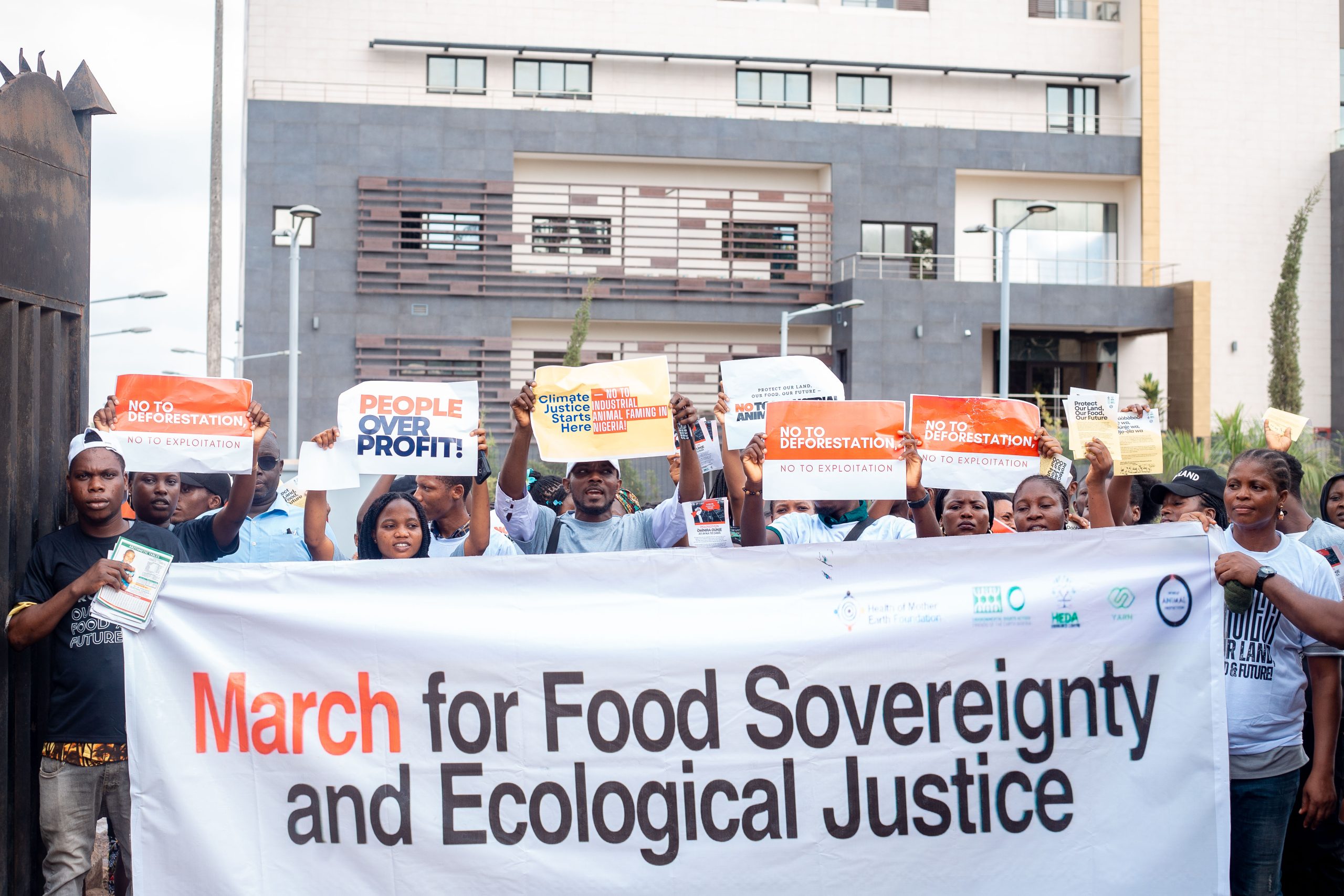
Examining the Impacts of Industrial Animal Farming in Nigeria: Spotlight on JBS
Industrial animal farming – often referred to as factory farming – is rapidly emerging as a defining issue in Nigeria’s agricultural and food production landscape. Its expansion carries profound consequences for public health, environmental sustainability, animal welfare, labor rights, community livelihoods, and food sovereignty. The proposed entry of JBS into Nigeria heightens the urgency of critically examining the long-term impacts of large-scale, industrialized farming models on people and ecosystems.
In December 2024, the Nigerian government signed a Memorandum of Understanding with JBS S.A., the world’s largest meat processing corporation, to establish industrial animal farming facilities valued at $2.5 billion across several states in Nigeria. While the investment has been promoted as a pathway to job creation and improved food security, it has sparked serious concerns among civil society organizations, farmers, pastoralists, and community representatives regarding its social, environmental, economic, and human rights implications.
This project, led by YARN, in partnership with the Health of Mother Earth Foundation, Friends of the Earth, HEDA Resource Centre, and World Animal Protection aims to elevate public and policy awareness of the risks associated with JBS’s business model by spotlighting evidence of its socio-ecological and unethical practices globally, and drawing parallels with local extractive experiences in Nigeria, such as the long-standing impacts of oil pollution in the Niger Delta. Through research, workshops, policy engagement, media advocacy, and community mobilization, the project centers the voices of smallholder farmers, pastoralists, indigenous peoples, and frontline communities, who are often excluded from decision-making yet most vulnerable to displacement and environmental harm.
Using JBS as a case study, the project brings together stakeholders from government, academia, civil society, farming communities, the health sector, and the media to:
- Examine the impacts of industrial animal farming on Nigeria’s food systems
- Document community experiences and concerns related to existing industrial farms
- Develop evidence-based advocacy resources for policymakers
- Strengthen civil society and media capacity to engage on factory farming issues
- Advance policy reforms that promote resilient, just, and sustainable food systems
As Nigeria stands at a crossroads in shaping the future of its food and agricultural systems, this project calls for transparent, inclusive, and people-centered decision-making. We invite policymakers, civil society, farmers, journalists, researchers, and concerned citizens to engage with this process and work collectively toward food systems that protect people, animals, and the planet.
Amplifying Community Voices on Climate Change
YARN, in partnership with NetHope and Ushahidi, is implementing a pilot project titled “Amplifying Community Voices on Climate Change.” The project seeks to ensure that the lived experiences of frontline communities are centered in climate adaptation and resilience planning.
Across Nigeria, the cascading impacts of climate change are becoming increasingly evident. These impacts are further intensified by existing vulnerabilities, particularly among rural and marginalized communities who are already struggling to survive and have limited capacity to respond to and adapt to climate shocks. Despite this reality, these same communities are often excluded from decision-making processes when climate policies and interventions are designed.
Evidence from numerous studies shows that those most at risk from climate change are people whose livelihoods depend heavily on natural resources and rain-fed agriculture. This reflects the lived realities of many Nigerian communities. Smallholder farmers face declining incomes due to late onset and early cessation of rainfall; women and girls walk long distances to access increasingly scarce water; coastal communities experience loss of lives and livelihoods due to rising sea levels; persons living with disabilities and the elderly face heightened barriers to adaptation; and communities in Northern Nigeria are forcibly displaced due to drought and desertification. Without improved, inclusive, and needs-based policies, these challenges are likely to worsen.
This pilot project aligns with the Climate Equity pillar of the Climate Intersections Initiative. The pillar focuses on elevating community perspectives and lived experiences in climate adaptation and resilience planning at local, national, and global levels. Through this initiative, a comprehensive dataset will be developed that captures firsthand community experiences of climate change, including vulnerabilities, existing capacities, and adaptation strategies. The dataset will serve as an evidence base highlighting the impacts of climate change and the effectiveness of mitigation and adaptation policies implemented by governments, civil society organizations, and UN agencies.
In Nigeria, the project aims to gather insights into climate experiences and needs across one or two regions in Ogun State. The primary goal is to collect the lived experiences of over 3,000 individuals. These insights will be shared back with participating communities and their leaders, alongside capacity-building efforts to support the development of locally driven climate action plans.
Project Objectives
The project is guided by the following objectives:
- Amplify Community Voices:
To collect and elevate community members’ lived experiences of climate change, and support communities in using this data for local-level climate action and advocacy. - Build Local Capacity:
To engage communities and their leadership in understanding their climate vulnerabilities and strengths, and to co-create inclusive, participatory, community-based adaptation plans. - Enable Learning and Scale:
To leverage insights from the pilot phase to refine approaches and enable replication of the initiative in other geographic locations, supporting scalability and long-term impact.
Through this project, YARN and its partners aim to ensure that climate solutions are informed by those most affected – placing community voices at the center of climate action.

Fresh Vegetables For SupermarkeFood and Climate Action: Profiling Young Farmers in Nigeria and Glasgowt
Young people are our Beacons of Hope around the world, leading on addressing the challenges associated with food security. Agriculture was once perceived to be a threatened occupation among young people, a narrative that is gradually becoming of the past. In this short film project implemented with our partner https://glasgowfood.net/ (Glasgow Community Food Network), we shall be profiling young growers in Nigeria and the UK, giving them the visibility that they deserve, while serving as a motivation for other young people through their stories of hope. As part of this project, we will create a short 5-minute film, showcasing the experiences of young growers in Nigeria and Scotland, and also create a platform for exchange of ideas, best practices, and storytelling for these young growers. I you are a young farmer between the ages of 18 and 30 in Oyo State Nigeria, do well to reach out to us, we want to hear from you.


Boosting Farmers Yield Through Soil Testing.
An understanding of the soil quality and fertility level could improve the yield and profitability of local farmers, especially with the current reality of farmers investing so much, only to earn so little. Unfortunately, due to constraints such as poor awareness, unsubsidized cost of analysis, and related supply side constraints, soil testing is still largely not common in Nigeria, particularly among local farmers. Given the rate of chemical fertilizer use, and rising imbalances in the adoption and use of different types of fertilizer, soil testing needs to be promoted among farmers, particularly smallholders.
Over the next 3 months, Youth in Agroecology and Restoration Network Team will be working with local farmers in Ido LGA of Ibadan, Nigeria to analyse their soil at no cost.


Fork to Farm Local Dialogue in Oyo State, Nigeria (In Collaboration with Nourish Scotland, UK)
The actions proposed to tackle climate change necessitates major shifts in land use and farming. If done badly these will add to the burden of farmers the world over, who already face disruption to their livelihoods from the climate emergency as well as from COVID-19. The local responses to the COVID pandemic show that subnational actors can greatly contribute to tackling the climate emergency, and the need for farmers to be part of this process. Our local dialogue is a series of inclusive conversations that ensures that the improved mutual understanding of farmers’ and cities’ ambitions and circumstances results in new partnerships for positive change. We achieve this by bringing together representatives of diverse food producer communities, cities, and regions in constructive dialogues on a just transition in food and farming. During these dialogues, we deliberate on best practices to tackle the triple challenge of climate change, nature loss, and nutrition fairly and coherently. Our local dialogues aim to build trust, relationships and shared understanding which provides the foundation for better local partnerships and long-term change.


Farmers support program
Incentivizing has been shown to enhance the adoption of best practices, and we believe that rural farmers should be supported in their effort to meet the nutritional needs of the burgeoning African population. With our farmers support program, we are building the capacity of farmers on sustainable farming best practices, and organic fertilizer production and use, by organizing training and workshops. We also support rural farmers by providing farming tools and equipment that enables them to produce all year round, and we also register clusters of farmers as a Farmers Cooperative Society free of charge, to enable them better access opportunities. Our motivation is to ensure that farmers receive values for their investment and to see rural poverty alleviated while ensuring food sovereignty in Africa.

Activating Young Nigerians for Biodiversity Conservation (In Collaboration with Youth for Our Planet International – Nigeria chapter).
The 3 months-long project aims to mobilize young Nigerians for digital training and capacity building on youth leadership engagement and also provide platforms for young people – political leaders dialogues that will inform on need-based policy formulations that protect natural habitats, stop environmental degradation and conserve national biodiversity richness in the Nigeria environment. The project will deliver the following objectives: provide a platform and facilitate virtual exchange between decision and policymaker and political leaders and the local communities; bring into the political mainstream the voices of Nigerian youths on national environmental management issues; build the capacity of young Nigerians on digital activism and contemporary environmental challenges; increase youth participation in government environmental restoration projects and decision-making process and integrate Nigerian youth voices in preventing biodiversity loss and conservation of natural habitats.

AFSTC
Are you an African CSO working to advance the adoption of sustainable agricultural practices in the region? Join us for an online policy and issue briefing session on February 7, 2025, where you can share your perspectives, assess the coverage of the key theme on extension and advisory services in the region, and suggest priorities for philanthropic investments. This session will be attended by a select group of researchers and practitioners from across Africa. We also hope this will pave the way for future collaboration.
Background
Agriculture is arguably the economic mainstay of Africa, providing livelihoods and employment for more than half of the continent’s population. However, it remains the most vulnerable sector to climate change, with smallholder farmers particularly susceptible due to their reliance on rain-fed production systems and limited adaptive capacity. As Africa faces ongoing food security challenges, the compounded effects of climate change and environmental degradation demand urgent action to transform food systems.
To address these challenges, systemic shifts are necessary, shifting beyond mere reform to the actual transformation of Africa’s food systems. This transformation requires enhancing inclusivity, resilience, and adaptive capacity within agricultural systems to meet the needs of a growing population.
Agroecology presents a promising approach to sustainable agricultural development, as it restores and protects vital environmental resources such as water, soil, and biodiversity through sustainable practices. However, to fully realize agroecology’s potential, it is critical to equip farming communities with the necessary knowledge and skills. Extension and advisory services (EAS) are central to this process acting as key conduits for education and capacity building, facilitating the transfer of innovative knowledge and practices, and fostering resilient, sustainable agricultural systems.
The African Climate Foundation (https://africanclimatefoundation.org/), through AFSTC, has partnered with research consultants to develop issue briefs aimed at informing philanthropic investments in Africa’s sustainable food system transformation. This initiative seeks to build a multi-disciplinary network of experts to identify key intervention areas and address critical research gaps. A research team has been formed to explore the role of extension and advisory services in scaling agroecology across Africa, and has completed a literature review that highlights some promising initiatives in this field. If you work in this field, we believe that your organization’s expertise and work in the region positions you as a key stakeholder in this area, and we would greatly value your insights. Do well to join us.